
More than 37 million Americans have diabetes. And for many of them, the most significant long-term risk (to their vision!) isn’t yet on their radar. diabetes and vision loss
Diabetic retinopathy is the leading cause of vision loss among working-age adults in the United States, affecting more than 7 million Americans. It is also, in many cases, preventable (or at least manageable) if caught early enough. The challenge is that “early enough” is when there are often no symptoms at all.
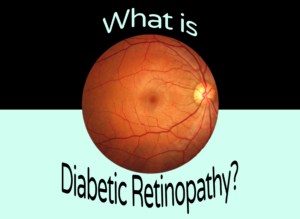
So—what is diabetic retinopathy? diabetes and vision loss
The retina is the light-sensitive layer at the back of the eye. It requires a constant, reliable supply of blood. In people with diabetes, high blood sugar levels damage the small blood vessels that supply it.
Over time, those damaged vessels can leak, swell, or grow abnormally. When they do, vision is affected. In later stages, without treatment, the damage can be severe and irreversible.
There are two main forms. Non-proliferative diabetic retinopathy (NPDR) is the earlier stage, in which blood vessels weaken and leak fluid into the retina. In many cases, there are no symptoms or only mild ones. Proliferative diabetic retinopathy (PDR) is the more advanced form, in which new, abnormal blood vessels grow on the surface of the retina. These are fragile and can bleed into the eye, causing significant vision loss.
A third condition, diabetic macular edema (DME), can occur at any stage and involves swelling of the macula — the part of the retina responsible for sharp central vision. DME is the most common cause of vision loss in people with diabetic retinopathy.
Why early detection matters so much
The absence of symptoms in early diabetic retinopathy is both the most important fact about the condition and the most dangerous one. Many people don’t know they have it until the damage is already significant.
A dilated eye exam — in which an eye doctor uses drops to widen the pupil and examine the retina directly — is the only way to detect diabetic retinopathy before symptoms appear. The National Eye Institute and the American Diabetes Association both recommend a dilated eye exam at least once a year for anyone with type 1 or type 2 diabetes.
Early detection matters because treatment works better before significant damage has occurred. Anti-VEGF injections, laser treatment, and in some cases surgery can slow or stop progression — but they are most effective when started early.
Managing the risk
Protecting vision for people with diabetes is closely connected to managing the diabetes itself. Blood sugar control, blood pressure management, and cholesterol levels all directly affect how fast diabetic retinopathy progresses. Smoking is an additional risk factor that significantly accelerates vascular damage.
This doesn’t mean that people with well-managed diabetes won’t develop retinopathy — the risk is related to both control and duration. People who have had diabetes for many years are at higher risk regardless of how well-managed their condition is. But good management consistently delays onset and slows progression.
If vision loss has already occurred
For people who have already experienced significant vision loss from diabetic retinopathy or DME, the practical focus shifts from prevention to adaptation and independence.
The National Eye Institute and American Foundation for the Blind both have resources on vision rehabilitation — the process of learning to adapt to changed vision using technology, training, and support.
Voice-operated technology can significantly support independence for people managing vision loss alongside diabetes. RealSAM Pocket, for instance, allows people to make calls, read labels, set medication reminders, access news, and navigate independently—all by voice, without needing to see a screen. For many users, Sight Assistant, a voice-activated camera feature, is particularly useful for reading medication labels and identifying objects.
Our financial assistance page lists funding programs that may cover assistive technology for eligible Americans, including VA programs and state vocational rehabilitation.
The key takeaways diabetes and vision loss
A dilated eye exam, at least once a year, for anyone with diabetes. Managing blood sugar, blood pressure, and cholesterol as closely as possible. Not smoking. And knowing that if vision loss has occurred, support and technology are available.
The American Diabetes Association and Prevent Blindness both have detailed resources on eye health for people with diabetes.
RealSAM Pocket is a voice-operated smartphone for blind and visually impaired people — designed to support independence in daily life. Find out more →